Author: Min

  • Where To Stay For WATERBOMB Seoul 2026: The 2 Hotels Right By KINTEX (+ Price Comparison)

    Where To Stay For WATERBOMB Seoul 2026: The 2 Hotels Right By KINTEX (+ Price Comparison)

    By MIN, a Seoul local · Updated June 2026 · ~5 min read

    You’ve got your WATERBOMB Seoul ticket. Nice. Now comes the part that trips everyone up: where do you actually sleep? KINTEX sits a little outside central Seoul, so the question matters more than usual. Short answer: stay right next to the venue. After hours of getting soaked, the last thing you want is a long, wet commute. Being in bed five minutes after the encore beats everything.

    What most guides won’t tell you: the hotels next to the venue are actually cheaper than downtown Seoul. And right by KINTEX there are really only two proper hotels, Gloucester and Sono Calm, so I compared both — with live availability and what each booking site actually charges.

    As a Korean local, here’s the insider take you won’t get from a generic “Top 10 Seoul Hotels” list. Full honesty: I haven’t personally stayed in these. But I help friends visiting Korea sort out where to stay all the time, so I dug through the real ratings, live availability, and the actual prices, and kept only what I’d book myself.

    ⚠️ Disclosure: This post contains affiliate links. If you book through them it costs you nothing extra, and I may earn a small commission. Prices and availability change in real time, so always confirm the final number on the booking site. I only recommend places I’d genuinely consider. (Some images in this post are AI-generated.)


    Where To Stay At A Glance

    HotelBest forPrice (all-in/night)*Book
    🏟️ Gloucester Hotel Kintex (4★)Collapsing into bed 5 min after the show$$ (~$164)✅ Free cancellation
    🏟️ Sono Calm Goyang (5★)A pool, breakfast & sauna to recover in$$ (~$199)✅ Free cancellation

    👉 Both are a short walk from the stage, both cancel free. Rooms in this area are already going fast, so lock in a free-cancellation rate now and decide later.
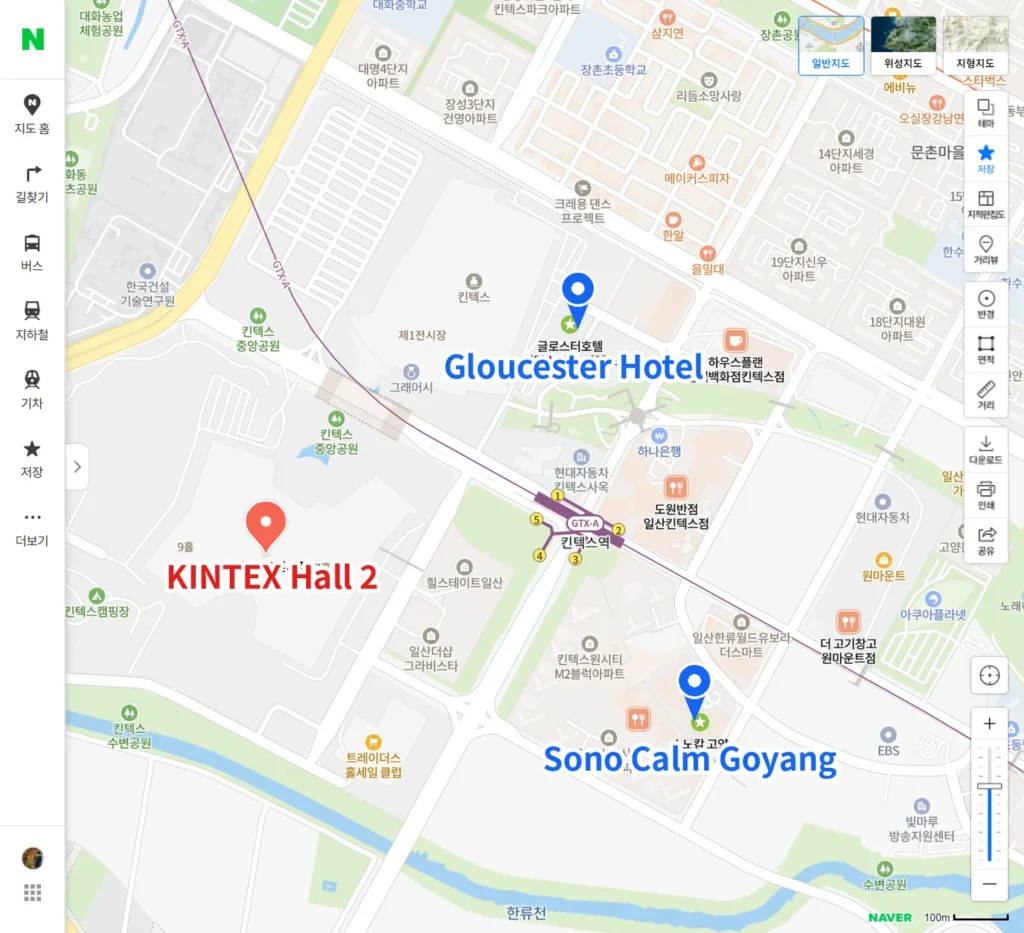
    Map showing KINTEX Hall 2 and the two nearby hotels, Gloucester and Sono Calm
    Both hotels are within walking distance of the WATERBOMB stage.

    *Approximate, taxes & fees included, converted at roughly ₩1,400 = $1 (checked 25 Jun 2026). Always check the live price.


    WATERBOMB Seoul 2026 — The Basics

    • Dates: Fri 24 – Sun 26 July 2026 (3 days)
    • Venue: KINTEX Outdoor “Global Stage”, Hall 2 — Ilsan, Goyang
    • Entry: 19+ only, physical photo ID required · QR ticket (link sent ~10 days before)
    • Line-up (varies by day): Jay Park, BIBI, KISS OF LIFE and more · Sat 7/25: Karina (aespa) · Sun 7/26: RIIZE, Dayoung, Hi-Key · plus Taemin, Sunmi, J.Y. Park, CHANGMO, Lee Young-ji (rolling reveals, subject to change)
    • Tickets: ₩165,000 face value · sold in waves (when one sells out, the next opens at a higher price)

    The stage sits on the Hall 2 side, the part closest to GTX-A Kintex Station, so both hotels below are a quick walk to it.
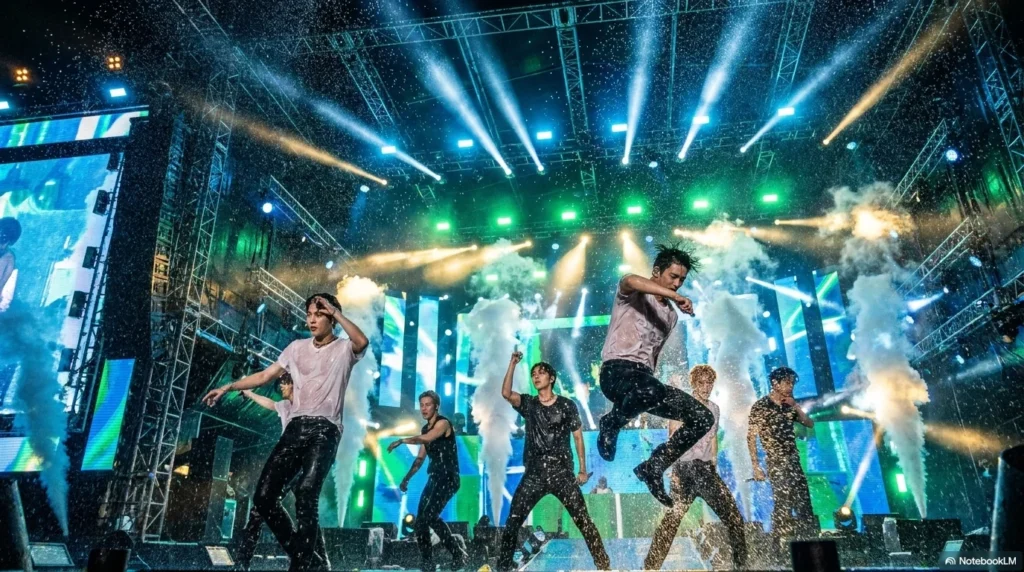
    WATERBOMB performance on the KINTEX Global Stage with lights and water spray
    The best spot at WATERBOMB is right up front. (AI-generated)

    Getting There — The GTX Changed Everything

    WATERBOMB runs from early afternoon into the night, and when it ends, tens of thousands of soaked people pour toward the station at once. So it comes down to one thing: how fast and how painlessly you get to a bed.

    Good news: GTX-A’s Kintex Station opened in late December 2024, and getting in from the city got a lot easier.

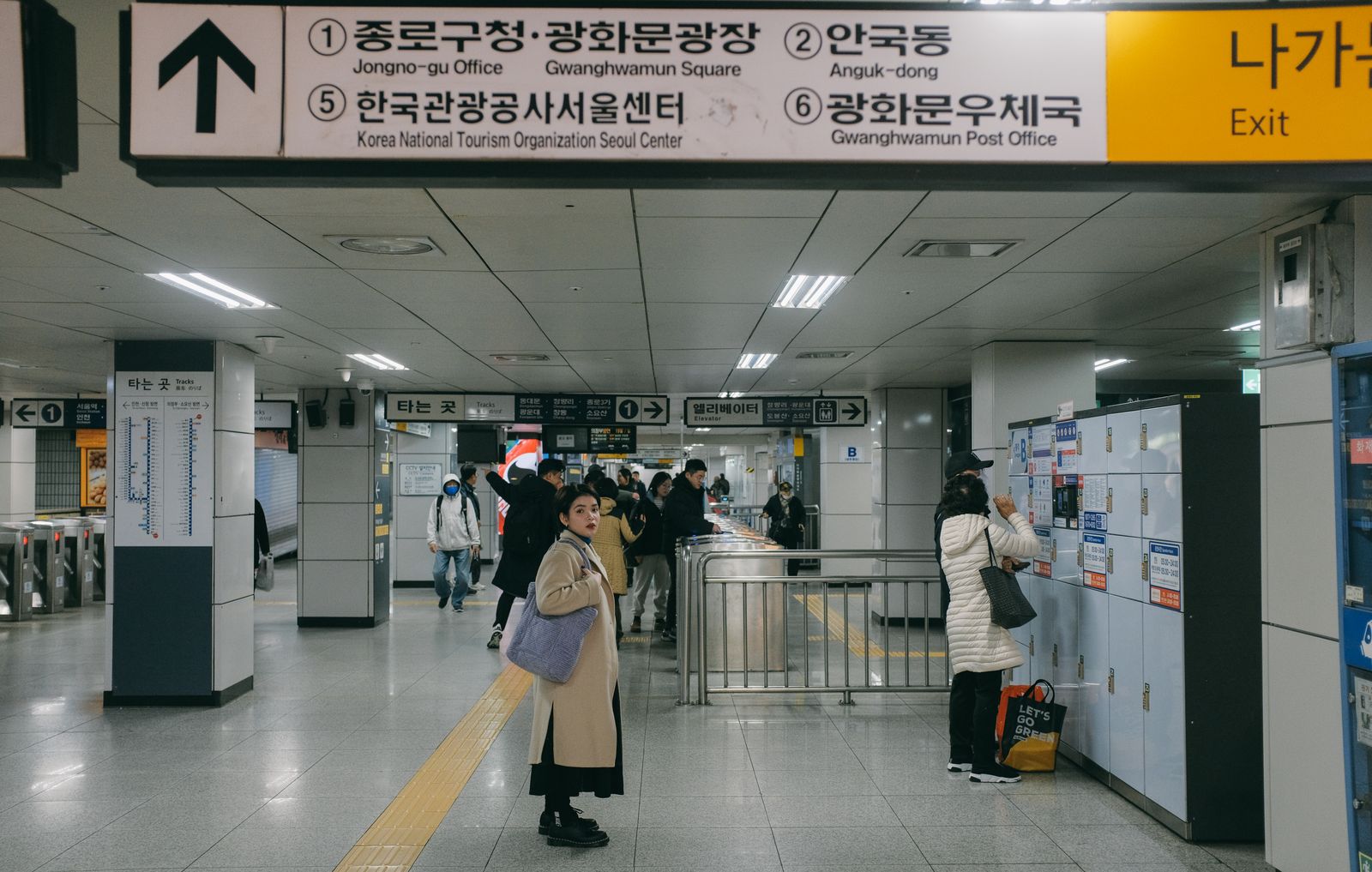
    • GTX-A: Seoul Station → Kintex in just 16–17 minutes, no transfer. About a 5-minute walk from the station to the venue gate.
    • No reservation, no assigned seats. It works like a regular subway — tap your transit card (T-money or a credit card), or buy a single-use ticket from the machine. It’s not KTX/SRT.
    • Late last train. Service runs until around 1 a.m. (last trains leave the end stations at 0:38), so even if the show runs late, you’ve got hours of buffer.

    So staying right by the venue doesn’t trap you out in Goyang. Sleep next to the stage on show day, then take the 17-minute GTX into Seoul (Myeongdong, Hongdae, Gangnam) the next morning. WATERBOMB and the city, without a painful late-night trek.

    🚇 The one catch: the crowd, not the schedule. KINTEX mega-events pack the GTX to record levels, so heading straight for the station the second it ends means a long line. Let the crush thin out for 30 minutes, or just stay next door and skip it entirely.


    The 2 Hotels Right By KINTEX

    1. Gloucester Hotel Kintex (4★) — the smartest pick

    (Formerly “Kintex by K-Tree”; rebranded by the Gloucester group in Nov 2025, so it may still show under the old name on maps and booking sites.)

    Right beside KINTEX Hall 1, linked to GTX-A Kintex Station exit 1, a few minutes’ walk to the stage. It’s a 422-room property with solid ratings (8.5 on Trip.com, 8.5 on Agoda, thousands of reviews) and a breakfast buffet at The Oksang on the 16th floor. Free cancellation, and the price is more than fair for how close it is.

    • All-in (taxes & fees included) from ~$164/night ($$) (Agoda, 24 Jul, 1 night, 2 adults; Trip.com ~$181)
    • ✅ Free cancellation · best value-for-location of the two

    If your plan is “be unconscious five minutes after it ends,” this is #1.

    Check Gloucester reviews & rating >
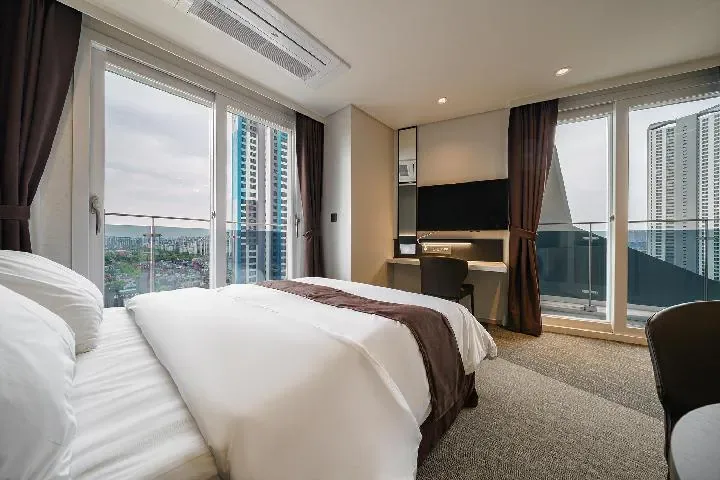
    2. Sono Calm Goyang (5★) — for a pool, breakfast & sauna

    (Formerly MVL Hotel.)

    Near Kintex Station, walkable to the stage. Full five-star kit (breakfast buffet, indoor and outdoor pools, a sauna, an in-house Starbucks) with high marks (9.2 on Trip.com, 8.8 on Agoda, 10,000+ reviews). Free cancellation. Perfect if you want to burn out at WATERBOMB and recover in hotel-spa mode.

    • All-in from ~$199/night ($$) (Trip.com, 24 Jul, 1 night, 2 adults; Agoda was sold out for that date when checked)
    • ✅ Free cancellation · the “WATERBOMB + hotel chill” combo

    Check Sono Calm reviews & rating >
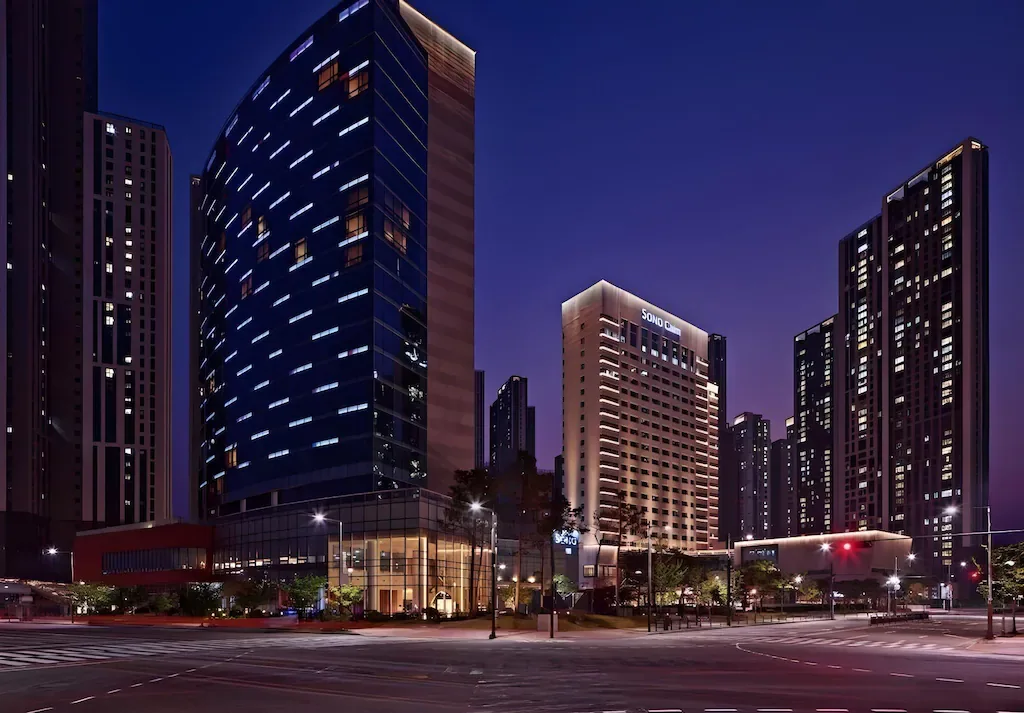

    Price Comparison — Trip.com vs Agoda vs Klook

    (Checked 25 Jun 2026 · 24 July, 1 night · 2 adults · all-in = taxes & fees included · ~₩1,400 = $1)

    HotelClassTrip.com /nightAgoda /nightKlookCancellation
    Gloucester Kintex4★₩252,800 (~$181)₩229,818 (~$164) ⭐₩388,130 (~$277)Free
    Sono Calm Goyang5★₩278,000 (~$199) ⭐Sold out (this date)₩337,379 (~$241)Free

    ※ Prices and availability move constantly. The above is a 25 Jun 2026 snapshot for 24 July (1 night, 2 adults), so re-check via each row’s “Check live price” link. ⭐ = cheapest site for that hotel right now. On the same date, Klook came out the most expensive for both hotels — so on price, Gloucester is cheapest on Agoda, and Sono Calm on Trip.com (Agoda was sold out for the date).

    💡 Want cheaper? There are budget hotels a little further out (around Daehwa Station), but they sell out fast for WATERBOMB weekend. With the festival a month away, more than half the area’s rooms are already gone. They’re not within walking distance of the venue, so if price is your top priority, scan the live links above for whatever still has rooms.


    If I Were Choosing

    Both are a short walk from the stage, so location is basically a tie. It comes down to this:

    • Best value + unconscious 5 minutes after the show → Gloucester Hotel Kintex. ~$164 all-in, free cancellation. The safe, sensible answer.
    • Might as well enjoy a 5★ pool & breakfast → Sono Calm Goyang. Same walk to the venue, with a hotel-spa upgrade.

    Start with Gloucester — location, price and cancellation are all easy. If you want the pool and breakfast on top, bump up to Sono Calm.

    Gloucester best price (Agoda)

    Sono Calm best price (Trip.com)


    Before You Book — Timing & Cancellation

    1. Compare now, not later. More than half the area’s rooms are already gone (as of June). On a festival weekend, even a day’s delay means a higher price or a sell-out.
    2. Use the free-cancellation rates. Both hotels cancel free (deadlines vary — check at booking). Lock one in and cancel if plans change; that beats doing nothing and finding it all sold out.
    3. At the venue: from GTX-A Kintex Station, head for the Hall 2 exit (confirm the exit number on-site). Budget extra time for the post-show crowd rush.

    Before You Fly — Sort Your Transit Card

    Paying for Seoul’s buses and subway is easy once you’ve got the right card. I compared the options (T-money vs WOWPASS and more) here:

    👉 Which Korea Travel Card Should You Get?


    Wrap-Up

    • Want to collapse 5 minutes after the show → Gloucester Hotel Kintex (value · free cancel).
    • Want a pool & breakfast too → Sono Calm Goyang (5★).
    • Venue-side is cheaper and better located. But half this area is already booked, so the people who lock in a free-cancel rate now are the ones who win.

    I haven’t dressed up a hotel I’ve never set foot in as “amazing.” I just compared the real ratings, availability and prices and kept the smart picks. Two quick taps before you fly 👇

    Have a blast. Go wild in the water, book smart for the bed. 💦
  • Where to Stay in Seoul: A Local’s Honest Guide (2026)

    Where to Stay in Seoul: A Local’s Honest Guide (2026)

    Disclosure: Some links here are affiliate links. If you book through one it costs you nothing extra, and I earn a small commission. What I recommend is based on location, real reviews, and how you actually get around — not on who pays me.

    “Where should I stay in Seoul?”

    Every friend who visits Korea asks me this. And honestly? Most “where to stay in Seoul” posts online were written by someone who passed through once. Pretty hotel photo, a “this place is amazing!”, and that’s the whole review.

    I live here. When friends come, I match them to a neighborhood based on what they’re actually in town to do. So this isn’t a list of hotels — it’s about which neighborhood is right for you, and how not to overpay for the exact same location. I haven’t slept in every hotel in this city. But the guest reviews, the real walk to the station, the stuff booking sites bury in the fine print? That part I dig through so you don’t have to.

    First, one 2026 reality check:

    Seoul got expensive. Arrivals hit a record (~18.5 million in 2025) while almost no new hotels opened. Peak season runs effectively full (occupancy in the low 80s%), the citywide average room rate is pushing ₩300,000 (~$210) a night, and the luxury places in Gangnam or Myeongdong flirt with ₩1,000,000. Bottom line: book early — and know there are neighborhoods with the same access for half the price. I’ll point you to those, too.

    The 30-second gut check

    Don’t feel like reading the whole thing? Find your row and skip to that neighborhood below.

    If your trip is mostly… Stay in
    Skincare hauls, shopping, first time in KoreaMyeongdong
    Young, lively, budget, nightlifeHongdae
    Polished hotels, quiet, cosmetic/medicalGangnam
    Cafés, pop-ups, the perfect photoSeongsu
    Late-night shopping, night owlDongdaemun
    Living-like-a-local, the river, slow morningsMangwon · Yeonnam
    K-pop pilgrimage / a concertsee the K-pop map below

    The 5 classic bases — “if that’s you, here”

    Each of these gets its own full guide (some still in the works — bear with me).

    🛍️ Myeongdong — first-timers, shopping & beauty, dead center

    Stay here if: it’s your first time in Korea and you want cosmetics, street food, and currency exchange within a few blocks. It’s the easiest landing pad from Incheon Airport.
    Skip it if: you’re after quiet, local character.
    The honest downside: it’s loud, very touristy, and you pay a premium for that location.
    Min’s tip: the main-drag food stalls run on tourist prices. For dinner, walk five to ten minutes into a side alley, or over to Namdaemun Market or Euljiro’s Nogari Alley — same Myeongdong, completely different bill.
    🚇 Myeongdong (Line 4), Euljiro 1-ga (Line 2), Hoehyeon (Line 4) — all walkable · 💰 mid-to-high
    👉 Full Myeongdong guide — coming soon

    🎸 Hongdae — young, loud, easy on the wallet

    Stay here if: you’re in your 20s–30s and want live music, clubs, and an indie buzz without blowing your budget.
    Skip it if: you go to bed early.
    The honest downside: weekend nights are loud. Book a room one block off the main strip.
    Min’s tip: the big win is the direct airport train (no transfers) into Hongik Univ. Station. And instead of dead center, slide half a block toward Yeonnam or Mangwon — same transit, quieter, cheaper (more below).
    🚇 Hongik Univ. Station (Line 2 · Gyeongui-Jungang · AREX airport line) · 💰 roughly $125–300; hostels run lower
    👉 Full Hongdae guide — coming soon

    🏙️ Gangnam — polished, upscale, and you’ll pay for it

    Stay here if: you want a big, modern room, you’re here for cosmetic or medical treatment, or your plans (entertainment, dance studios) keep you on this side of the river.
    Skip it if: alley charm and value are your priorities.
    The honest downside: it’s pricey (top-end near ₩1,000,000 a night), and Lines 2 and 9 are a crush at rush hour.
    Min’s tip: you don’t have to be right on top of Gangnam Station. Seolleung, Yeoksam, and Sinnonhyeon are a stop or two over and noticeably cheaper.
    🚇 Gangnam · Samseong · Sinnonhyeon (Lines 2 · 9 · Sinbundang) · 💰 upper-mid to high
    👉 Full Gangnam guide — coming soon

    ☕ Seongsu — Seoul’s “Brooklyn,” all atmosphere

    Stay here if: cafés, concept stores and pop-ups are the point of your trip, you’re a photo person, or you’re orbiting the entertainment scene (SM is here).
    Skip it if: you want palaces and old-Seoul sights within walking distance — those are a ride away.
    The honest downside: weekends get crowded here too. (Why it’s so hot, just below.)
    🚇 Seongsu (Line 2) · Seoul Forest (Suin-Bundang) · 💰 mid-to-high, mostly boutiques
    👉 Full Seongsu guide — coming soon

    🌃 Dongdaemun — shopping marathon, night-owl heaven

    Stay here if: wholesale and late-night shopping is the mission and you’re up till dawn.
    Skip it if: you want a calm base.
    The honest downside: it’s a little dead by day, and the vibe is built around “shopping function” more than charm.
    🚇 Dongdaemun History & Culture Park (Lines 2 · 4 · 5), great transfers · 💰 mid
    👉 Full Dongdaemun guide — coming soon

    ⭐ Stay where Seoul actually hangs out

    Cozy hand-drip coffee shop on a Seoul side street

    Forget the tourist circuit — these are the neighborhoods where Seoul’s 20s and 30s actually go on dates and crawl cafés. Base yourself here and you’re inside local daily life, not a sightseeing loop.

    The hot ones: Seongsu (the “Brooklyn”) · Hannam (sleek, upscale) · Ikseon-dong (hanok alleys) · Yeonnam (“Seoul’s Central Park”) · Mangwon (market + residential calm) · Mullae (cafés tucked between old machine shops).

    Here’s the local insight nobody tells you:

    Every hot neighborhood runs the same cycle: quiet residential street → indie cafés draw a crowd → rents spike → the small places get pushed out → big franchises move in. So Seongsu and Yeonnam are already “mature” — still great, but plenty of chains and packed on weekends. Mangwon and Mullae are still “early” — rents haven’t fully jumped, so the real local character is intact.
    Cafés and photos are the goal? Seongsu / Yeonnam. Want the genuinely un-touristy version? Mangwon / Mullae. Pick your flavor.

    ☕ Stay-to-café link: if your mornings start in a café, base yourself in one of these. The specific local-favorite spots — the ones that last, not the one-season hype — live in each neighborhood guide.

    ⭐ K-pop fan? Let me map it for you

    Pilgrimage or concert, paying top dollar right next to the venue or the label is a tourist move. Stay one stop over, at a transfer hub — cheaper and quieter.

    The label HQs (you usually can’t go in — but the fan spots, yes):

    Label Where What fans can visit Good base nearby
    SM Seongsu, D-Tower (linked to Seoul Forest Stn) KWANGYA@SEOUL shop (B1) · idol screens & SM café (1F) Seongsu / Seoul Forest, or one Line-2 stop over
    YG Hapjeong / Hongdae area ‘The SameE’ café + goods shop across the street Hongdae · Yeonnam · Hapjeong (great value)
    HYBE ~8-min walk from Yongsan Stn (no official shop) nearby birthday-café events Yongsan · Samgakji

    (JYP and others — I’ll add them in the neighborhood guides.)

    💬 Local TMI: I once spotted BIGBANG near the YG building. Only TOP and Daesung, but still — you really do run into people on the street here. Full honesty, though: I worked on a project nearby for a year and saw them exactly once. So no, I can’t promise it. But it happens.

    Concert night — “stay one stop over and save”:

    KSPO Dome / Olympic Park (Songpa): the local pick is the Seoul Olympic Parktel — a 10-min walk from Mongchontoseong Stn (Line 8), basically at the venue and solid value for it. Rates swing with the date (weeknights cheapest, roughly ₩130,000–200,000) — check the live price.

    Gocheok Sky Dome (Korea’s biggest indoor venue): Ramada by Wyndham Seoul Sindorim —  about an 8-min walk (~600m) from Sindorim Station (Lines 1 & 2; Guro Station is just as close), and the dome is a 2-min drive away (a short bus ride). Sindorim is a transfer hub, so you get anywhere fast, and there are almost no tourists, so rates stay sane.

    INSPIRE Arena (Yeongjong Island, Incheon) — the exception: this one’s out by the airport, not in Seoul. If your whole trip is built around an INSPIRE show, skip the late-night haul back to the city — just stay at the on-site Inspire Resort or an airport hotel (free shuttle, ~15 min). Doing Seoul too? Base in the city and treat the concert as a day-trip out.

    ⭐ The neighborhoods tourists miss

    People relaxing at a Han River park in Seoul

    Guidebooks rarely send you here, but they’re well-connected, less crowded, and — importantly — have real, bookable rooms.

    Mangwon · Yeonnam — “Seoul without the rush”

    Korea’s own tourism board literally calls Mangwon “Seoul’s best-kept secret” — a local favorite people go to slow down.

    • Mangwon Market (running since 1975, an actual neighborhood market) · the Han River · cafés that double as indie bookstores · serious coffee
    • 🚇 Mangwon (Line 6) / Yeonnam sits right next to Hongik Univ. Station (Line 2 · direct airport train) — no transfers from the airport
    • 💰 guesthouses from the $25–40 range up to boutiques. Yeonnam alone shows 100+ bookable stays online. Value and local feel.
    • Real talk: Mangri-dan-gil has gotten busier lately. Read “un-touristy” as “way calmer than Hongdae,” not empty.

    👉 Full Yeonnam · Mangwon guide — coming soon

    Euljiro · Jongno — dead center, sane prices

    Old-Seoul alley drinking culture, alive and well. “Hipjiro” — Euljiro 3-ga’s Nogari Alley (pojangmacha tents + craft beer) and Gwangjang Market street food are all walkable, yet room rates often beat Myeongdong.

    • 🚇 Euljiro 3-ga (Lines 2 · 3), as central as it gets · 💰 budget hostels to 3-star

    👉 Full Euljiro · Jongno guide — coming soon

    Before you book — the 2026 reality, one more time

    Seriously: this is a hard year to find a room in Seoul. Demand is at a record, supply has barely moved (and won’t, for a few years). The good location-and-price combos go fast.

    • ✅ The early bird wins. Got dates? Don’t sit on it.
    • ✅ Want value? Take the “hidden” neighborhoods seriously. Same transit, close to half the price.

    Sort the basics first

    Once you’ve picked a neighborhood, read these two before you fly — I wrote full guides for both:

    FAQ

    Myeongdong vs. Hongdae? First trip + shopping/beauty → Myeongdong. Young, value, nightlife → Hongdae. Want quiet either way → book off the main street.
    Is Gangnam worth it? If you want upscale hotels, big rooms, or you’re here for medical/cosmetic reasons — yes. If alley charm and value come first — stay elsewhere.
    Where do I stay for a K-pop concert? Not right next to the venue — one stop over at a transfer hub (Gocheok → Sindorim, KSPO Dome → Mongchontoseong). Cheaper, less of a crush.
    Where’s the real local vibe? Mangwon, Yeonnam, Euljiro, Jongno. Good transit, fewer crowds, plenty of rooms.
    Do I need to switch neighborhoods mid-trip? For 3–4 days, one base is plenty. Pairing Seoul with Busan/Jeju? Prioritize airport-train access (Hongik Univ., Seoul Station).

    Still deciding? Find your neighborhood

    Each guide goes deep — prices, specific hotels, the local cafés I’d actually send you to. (Rolling out one by one — check back.)
    Myeongdong · Hongdae · Gangnam · Seongsu · Dongdaemun · Yeonnam · Mangwon


    Written by Min · Seoul-based stay planner
    I live in Seoul and map out where to stay — by neighborhood, by budget, by what you actually came to do. I haven’t slept in every hotel here, but the reviews, the walk times, and the honest downsides? I do that homework so you don’t have to.


  • Which Korea Travel Card Should You Get? (2026)

    Which Korea Travel Card Should You Get? (2026)

    Disclosure: This post contains affiliate links. If you book through them, I may earn a commission at no extra cost to you.

    Your first cold sweat in Korea

    It usually hits at a subway gate.

    You tap the card that works fine everywhere back home. Beep. The gate stays shut. The line behind you grows. You tap again. Beep.

    Korea is almost entirely cashless — cafés, taxis, convenience stores, one tap and done. And yet your card is the one that keeps getting turned away. It’s not you. The system was built for locals, and visitors fall through the cracks.

    The fix is simpler than the problem: one card. The catch is that the right Korea travel card is different for different people. The four that matter — T-money, WOWPASS, the Climate Card and digital T-money — and you really only need one. No spec sheets, no another how to pay in Korea explainer. Tell me what kind of traveler you are, and I’ll point you to yours.

    The 30-second answer: which Korea travel card to get

    If this is you…Get…
    You hate fuss and you’re here for a few days🎫 T-money
    You want one card for transit, shopping and currency exchange (especially first-timers)💳 WOWPASS
    You live on your iPhone and travel light📱 Digital T-money iPhone
    You’re mostly in Seoul and ride transit all day🚇 Climate Card Tourist Pass

    Skip to your type below — or read all four, your call.

    Why your foreign card gets declined in Korea

    Three things, and then it all makes sense.

    1. The subway gate. Korean transit runs on prepaid tap cards (like T-money). Tapping a contactless card from back home straight on the gate — “open-loop” — isn’t a thing here yet (Seoul starts rolling it out in 2027, fully by 2030). So you need a transit card, full stop.
    2. Small shops, street stalls, traditional markets. Foreign cards carry high fees, so plenty of small vendors simply don’t take them. Cash wins here.
    3. Local pay apps (Naver Pay, Kakao Pay, Toss). Every Korean lives on them — and almost no short-term visitor can use them, because they need a Korean bank account and ID verification.

    Good news: one card plus a little cash covers all three. Your turn.

    ① “Keep it simple, short trip” → T-money

    You’d rather not think about it, and you’re in and out in a few days. Then don’t overthink it — get a T-money card. It’s the plain, reliable workhorse of Korean transit: nothing flashy, works everywhere, never lets you down.

    Seoul Metro ticket vending and T-money card recharge machines
    • Where to buy: any convenience store (CU, GS25, 7-Eleven, Emart24, Ministop), subway vending machines, or the minute you land (convenience stores in arrivals, the AREX travel center). The card runs about ₩2,500.
    • Where it works: subway, bus and taxi nationwide — plus convenience-store purchases.

    Topping it up (cash):

    • At a convenience store: hand the cashier your card and say “Top up my T-money, please.” (in Korean: Ti-meo-ni chung-jeon-hae ju-se-yo). Tell them the amount or just show the cash. No fee. Easiest option.
    • At a station machine: subway stations have card-charging machines near the gates (the same ones that sell single tickets, usually with an English option). Place your card on the pad → choose an amount (₩1,000 / 5,000 / 10,000 / 50,000) → feed in cash → done.
    • The rules: top up in ₩1,000 steps, up to ₩500,000. And remember this is transit money — at the ₩1,550 base fare, ₩20,000–30,000 is roughly 13–19 rides, i.e. a few days of getting around (meals and shopping are separate).
    • New in 2026: some stations now have newer kiosks by the gates that take foreign cards to buy and load transit cards (Visa and Mastercard officially; JCB, Amex and UnionPay too, reportedly). They’re spreading across major stations on Lines 1–8 (273 stations, 440 machines, since March 17) — so not every station yet. Everywhere else, top-ups are still cash.

    The honest downside: beyond transit and convenience stores you can’t pay with it much, and there’s no currency exchange. But that simplicity is the whole point.

    Refunds: before you fly out, claim your leftover balance at a convenience store — hand over the card and say “T-money refund, please.” They take a ₩500 fee and give you the rest in cash (balance has to be at least ₩1,000; convenience stores refund up to ₩20,000, or ₩30,000 at CU/Ministop/Emart24 — more than that, go to a station customer center). The card deposit itself isn’t refundable.

    👉 Short and simple? Get T-money. Reserve a T-money card

    ② “One card for everything / first visit” → WOWPASS

    You don’t want a wallet stuffed with cards — you want transit, payments and currency exchange handled in one move. That’s WOWPASS, a card built specifically for foreign visitors, which is exactly why it trips you up the least.

    • What it is: one card, two wallets inside.
      • ⓐ a payment wallet — load it with foreign cash or a foreign card, then pay by chip at shops nationwide.
      • ⓑ a transit wallet — your T-money.
    • Where to get it: the orange WOWPASS kiosks — Incheon Airport T1 & T2 stations, Gimpo and Jeju airports, and (reportedly) major stations and tourist areas too. Membership is ₩5,000, taken out of your deposit.

    How to load it:

    1. First issue (kiosk, cash): pick a language → “Issue New Card” → choose your currency → scan your passport → feed in cash → take the card out and reinsert to activate. It accepts 10+ foreign currencies.
    2. Top up — kiosk cash: free.
    3. Top up — app (foreign card): reload the payment wallet straight from your home credit card in the WOWPASS app. Convenient, but it carries a ~4% fee — so save it for a pinch; kiosk cash is cheaper.
    4. Fill the transit (T-money) wallet: 🍎 on iPhone, move money from your payment balance to transit right in the app (tap the card to your phone). 🤖 on Android, load the T-money side with cash at a convenience store or the blue T-money machines in stations.
    • Exchange tip: the app’s “Currency Exchange” gives you a live rate that beats airport booths and holds its own against Myeongdong’s money changers.
    • 🇻🇳 First-time visitor from Vietnam? Domestic (NAPAS) cards often won’t swipe in Korea. WOWPASS needs no Korean account and no credit card — just cash — which makes it the safest bet for a first trip.
    • The honest downsides: the ₩5,000 membership, the 4% app-reload fee, and a transit wallet you fill separately. Street stalls are still cash.
    • Getting leftover money back: withdraw your remaining payment balance as Korean-won cash at a WOWPASS kiosk (you’ll need your app PIN; ₩1,000 fee, up to ₩100,000 per withdrawal). ⚠️ But the Incheon Airport kiosks can’t dispense cash — pull it out in the city beforehand, or use the Gimpo Airport kiosk.

    👉 Want one card to rule them all, or it’s your first visit? WOWPASS. Reserve a WOWPASS card

    ③ “Glued to your iPhone, travel light” → Digital T-money (iPhone)

    You pay for everything with your phone back home, and carrying a physical card feels like a chore. In 2026, Korea finally opened a door for you.

    Passengers riding a Seoul subway train

    First — is it a credit card? No. Digital T-money is still a prepaid (top-up) transit card — you load it in advance. The only difference is it lives in your iPhone’s Apple Wallet instead of your pocket.

    Step by step (an app update may have shifted these slightly — treat it as a guide):

    1. Install the app: get the official “Mobile Tmoney” app (look for the orange-and-blue ‘M’ logo).
    2. Sign up as a foreigner (new in March 2026): tap the big “Foreigner” button on the opening screen — it skips Korean ID verification and drops a blank digital T-money into your Apple Wallet.
    3. Reload: in the app, tap “Reload” → choose an amount → pick Apple Pay → confirm with your foreign card and Face ID / Touch ID.
    4. Ride: that’s it. Tap your iPhone on the gate and walk through — subway, bus, taxi, no physical card.
    • ⚠️ The Visa trap (don’t get caught): in-app reloads only work with Mastercard, Amex or UnionPay. Visa isn’t supported yet. Visa-only? Use a station kiosk to buy a Climate Card instead (it takes physical foreign cards for a small fee — around 3.7%, reportedly), or a cash-loaded physical T-money.
    • 🇯🇵 For travelers from Japan: if you already tap Suica on your iPhone every day, this’ll feel instantly familiar. Just note JCB is left out (same as Visa) — JCB-only, go WOWPASS.
    • Tip: you can do steps 1–2 before you even fly, then just reload and tap on arrival.
    • The honest downside: it’s effectively iPhone-only (Android / Samsung Pay are for Korean cards), and Visa/JCB are excluded.

    👉 iPhone + a Mastercard? Digital T-money is the smoothest ride.

    ④ “Mostly in Seoul, riding all day” → Climate Card Tourist Pass

    If you’re hopping subways and buses four or five times a day to cover Seoul, the Climate Card Tourist Pass gives you unlimited rides for a set number of days.

    • Prices: 1-day ₩5,000 / 2-day ₩8,000 / 3-day ₩10,000 / 5-day ₩15,000 / 7-day ₩20,000 (plus a ₩3,000 physical card).

    Where to buy and load it:

    • Buy the card (₩3,000): Seoul Metro customer centers (Lines 1–8), convenience stores near stations (GS25, CU, 7-Eleven), station vending machines, and the Seoul Tourism Plaza / Myeongdong Tourist Information Center.
    • Load a pass: at the self-service charging kiosks inside stations (Lines 1–9, Ui-Sinseol, Sillim, Gimpo Goldline) — they have English.
    • New in 2026 (since March 17): you can buy and load it with a foreign Visa or Mastercard at these kiosks (no cash needed) — there’s a small card fee (around 3.7%, reportedly).
    • The honest math: the card base fare is ₩1,550, so a ₩5,000 day pass pays off at about four rides a day (three rides is ₩4,650 — barely under). Riding only two or three times? Plain T-money is cheaper. Don’t force it.
    • The honest downside: it’s Seoul-focused (2026 added parts of Seongnam, Hanam and Uijeongbu). It won’t cover the Shinbundang Line or wide-area buses out of the city — so if you’ve got a day trip to Nami Island or Everland, it’s the wrong card.

    Cash — how much you actually need

    Even in a tap-to-pay country, you can’t ditch cash entirely. Whatever your type, carry ₩50,000–100,000 (roughly, for a week).

    Myeongdong shopping street in Seoul, a popular money-exchange area
    • Where you’ll need it: traditional markets, street food, older restaurants, some taxis, small boutiques, temples.
    • Why it’s nice: always works, never declined, and often faster than card at a tiny shop.
    • The downsides: you can lose it, exchanging is a hassle, you collect coins, and the rate can nibble at you.

    Cash tips:

    • Where to exchange: WOWPASS kiosks (decent rate) · Myeongdong’s private money changers (often great) · banks (fine) · “Global ATMs” at convenience stores and banks (withdraw won on a foreign card; your bank’s fee applies). 🚫 Airport exchange counters have the worst rates — change just enough to get into the city.
    • Always pay in won: if a card terminal asks “Pay in your home currency?”, say no and choose Korean won — that dodges the hidden conversion fee (DCC).
    • Ask first at small shops: before you pull out a card, a quick “Do you take cards?” (in Korean: Ka-deu doe-na-yo?) saves the cold sweat.

    What changed in 2026 (the quick version)

    • ✅ Tap your iPhone (digital T-money) straight on the gate — Mastercard / Amex / UnionPay (not Visa)
    • ✅ Reload transit cards with a foreign card at newer kiosks in major stations — Visa & Mastercard (JCB / Amex / UnionPay too, reportedly)
    • ❌ Tapping your raw credit card on the gate — not yet (phasing in 2027–2030)
    • ❌ Naver Pay / Kakao Pay — still need a Korean account / and the Vietnam–Korea QR link currently only runs the Korea-pays-in-Vietnam direction

    If an old blog tells you “just tap your foreign card” — skip it. Get this one distinction right and you won’t waste a trip.

    Read these before you go

    • 🛂 Visa & entry first: sort your visa / K-ETA before you fly → Korea visa & entry guide
    • 🏨 Payment sorted? One question left: where to stay → Where to Stay in Seoul (coming soon)
    Seoul skyline at night with Lotte World Tower over the Han River

    FAQ

    Do I need both T-money and WOWPASS?

    No — one is enough. Just transit → T-money. Transit plus payments and exchange → WOWPASS.

    Is WOWPASS worth it?

    If you want one card for transit, shop payments and currency exchange — yes, especially on a first visit (no Korean account or credit card needed). If you only ride the subway and bus, plain T-money is cheaper and enough.

    Can I use my own credit or debit card in Korea?

    At big chains, department stores and convenience stores, usually yes (Visa/Mastercard). At small shops, markets and street stalls, often not — so keep some cash. And you can’t tap it on a subway gate yet; you need a transit card.

    I only have a Visa — can’t I use digital T-money?

    Not for in-app reloads yet. Use WOWPASS (cash or app) or a cash-loaded physical T-money. (Station kiosks do take Visa to load cards, though.)

    Can I buy before I arrive?

    Yes — grab a voucher on Klook / KKday / Trip.com and swap it for the physical card at the airport. Digital T-money you can even add to your iPhone before you fly.

    Can I get refunds?

    T-money balance: at convenience stores (₩500 fee). WOWPASS balance: as cash at station kiosks or the airport — not at Incheon (₩1,000 fee). Card and membership fees aren’t refundable.

    Does Apple Pay work in shops?

    At big chains, convenience stores and department stores, yes. At street stalls and tiny shops, often not — the same limits as a physical foreign card.

    The bottom line

    Simple and short → T-money. One card for everything → WOWPASS. iPhone plus a Mastercard → digital T-money. All-day riding in Seoul → Climate Card. And whichever you pick, a little cash (₩50,000 or so) for the markets.

    That’s the payment stress handled. Which leaves just one real question — where are you going to stay? → Where to Stay in Seoul (coming soon)

  • Do You Need a Visa for South Korea? K-ETA & Entry Rules (2026)

    Do You Need a Visa for South Korea? K-ETA & Entry Rules (2026)

    “Wait — do I actually need a visa to go to Korea?”

    If you’re holding a US, UK, Canadian, Australian, New Zealand, or Irish passport and you’re coming to Seoul for a trip, here’s the short version: almost certainly not. And right now, you don’t even need K-ETA. But there’s one small thing you do need to do before you land — and a couple of ways people trip themselves up. Let me walk you through it.

    A personal note before we dive in: I’m Korean, so English isn’t my first language — but I’ve genuinely done my best with this. It actually started as the notes I’d send friends before they flew over to visit me in Seoul; I just cleaned them up and turned them into a post. Because it’s about visas, I checked every detail against the official sources so I wouldn’t hand anyone the wrong information. That said — I’m a travel planner, not an immigration officer, and entry rules do change. So please confirm with the official K-ETA site and your nearest Korean embassy before you fly. (Links at the bottom.)

    The 30-second answer

    • Tourism, a short trip, and one of the passports below? No visa. You enter visa-free.
    • K-ETA? Temporarily waived for your country through December 31, 2026 — so you can skip it for now.
    • What you actually do: fill out the quick e-Arrival Card online before you land (details below).

    That’s it for most people. The rest of this is the detail — read the part that applies to you.

    Are you visa-free? (and for how long)

    South Korea lets citizens of many countries in visa-free for short tourism. The day limit depends on your passport:

    Passport Visa-free stay (tourism)
    🇺🇸 United States90 days
    🇨🇦 Canada180 days (6 months)
    🇬🇧 United Kingdom90 days
    🇦🇺 Australia90 days
    🇳🇿 New Zealand90 days
    🇮🇪 Ireland90 days

    The fine print that actually matters:

    • This is for tourism, visiting, or short business — not work or study.
    • You’ll usually be asked for an onward or return ticket.
    • Your passport should be valid for your stay (6 months’ validity is the safe habit).
    • Don’t overstay. The day count is firm, and overstaying causes real problems on future trips.

    Not on this list? Plenty of other nationalities are visa-free too — but durations vary, so check the official source for your exact passport.

    “What’s this K-ETA thing, and do I need it?”

    This is where everyone gets confused, so here’s the straight story.

    K-ETA (Korea Electronic Travel Authorization) is Korea’s online travel authorization — like the US ESTA. Normally, visa-free travelers are required to get it before flying.

    But right now, it’s waived. To boost tourism, Korea has temporarily exempted travelers from the US, UK, Canada, Australia, New Zealand, and dozens of other countries from K-ETA — and that waiver has been extended through December 31, 2026.

    So, in plain terms:

    • You do not need K-ETA for a short tourist trip right now. ✅
    • You can still apply for it voluntarily if you want — the main perk is that a valid K-ETA lets you skip the arrival card. It costs a small fee and lasts a few years.
    • After December 31, 2026, the waiver may end and K-ETA could be required again. If your trip is in 2027 or later, check k-eta.go.kr before you book.

    Min’s take: for a short 2026 trip, most people just skip K-ETA and fill the e-Arrival Card instead (next). If you’d rather not bother with the arrival card at all, getting K-ETA once is a fine shortcut.

    What you do need now — the e-Arrival Card

    Incheon International Airport arrivals hall

    Since you’re entering visa-free without K-ETA, Korea asks for an e-Arrival Card — an online version of the old paper arrival form.

    • File it online up to 72 hours before you arrive (search “Korea e-Arrival Card” for the official portal).
    • Prefer paper? You can still fill the arrival card on the plane — but doing it online beforehand is faster at immigration.
    • Got K-ETA? Then you can skip the arrival card entirely — that’s its one real convenience.

    It takes a few minutes. Do it the night before your flight and walk straight through.

    ⭐ Local tip: skip the immigration line entirely

    Here’s one almost no guide mentions yet. As of March 2026, Korea opened its Smart Entry Service (SeS) — the automated immigration e-gates — to short-term visitors from 42 countries, including the US, UK, Canada, and Australia (age 17+).

    What it means: instead of queuing for a manual officer, you register once (free, at the counters inside Incheon Airport), then walk through the e-gates — passport scan, fingerprint, face, done in seconds. And it sticks: you can use the gates on future trips too, at any major Korean airport.

    For now you can only register at Incheon, but on a packed arrival morning, skipping that line is the kind of thing you’ll thank yourself for.

    When you do actually need a visa

    Visa-free covers tourism. You’ll need a proper visa before you come if you plan to:

    • Work — including teaching English, even short-term. (This one catches people. Tourism entry ≠ permission to work.)
    • Study at a Korean institution.
    • Stay longer than your visa-free limit (90 days for most; 180 for Canada).

    If that’s you, apply for the right visa category through a Korean embassy/consulate or the Korea Visa Portal before your trip.

    Young and want to stay longer? Look at the Working Holiday visa. If you’re roughly 18–30 (the UK goes up to 35, Ireland up to 34), Korea’s Working Holiday visa (H-1) is open to the UK, Australia, Canada, New Zealand, Ireland, the US and others. It lets you stay up to a year and work part-time to cover costs — a far better fit than trying to stretch a tourist entry. Apply through your nearest Korean embassy before you come.

    Quick note on Jeju

    You’ll sometimes see “Jeju is visa-free!” headlines. That’s aimed at nationalities that normally need a visa for the mainland — Jeju has a separate visa-free scheme. If you’re already visa-free for the mainland (US/UK/CA/AU/NZ), it doesn’t change anything for you: you can visit Jeju and the mainland on the same trip, no extra step.

    Min’s pre-flight checklist

    • ✅ Passport valid (6 months’ validity = no stress; some airlines insist on it even when Korea doesn’t)
    • ✅ Onward/return ticket booked
    • ✅ e-Arrival Card filed online (or plan to do the paper card) — or a valid K-ETA if you went that route
    • ✅ At immigration, have your first-night address and return ticket handy — they sometimes ask
    • ✅ Know your day limit and don’t overstay
    • ✅ Traveling in 2027+? Re-check the K-ETA waiver status first

    ⚠️ Don’t plan a “visa run.” Hopping over to Japan and straight back to reset your 90 days isn’t a reliable trick — immigration can refuse re-entry if it looks like you’re living here on tourist stamps. Need more time? Get the right visa (see Working Holiday above).

    One more time, because it’s your trip

    Entry rules move — exemptions get extended, paused, or changed. Before you fly, double-check the two official sources below. Five minutes now beats a problem at the gate.

    • 🛂 K-ETA (official): k-eta.go.kr
    • 🛬 e-Arrival Card (official): search “Korea e-Arrival Card”
    • ℹ️ General info: VisitKorea, or your nearest Korean embassy/consulate

    Visa sorted? Now the fun part

    A lively street in Seoul

    Once your entry is squared away, two reads that’ll save you money and hassle:


    Written by Min · Seoul-based travel planner
    I live in Seoul and help travelers sort the boring-but-important stuff — entry rules, transit, where to stay — so the trip itself is the easy part. I keep these guides current, but for anything official (visas, K-ETA), always confirm with the source before you go.